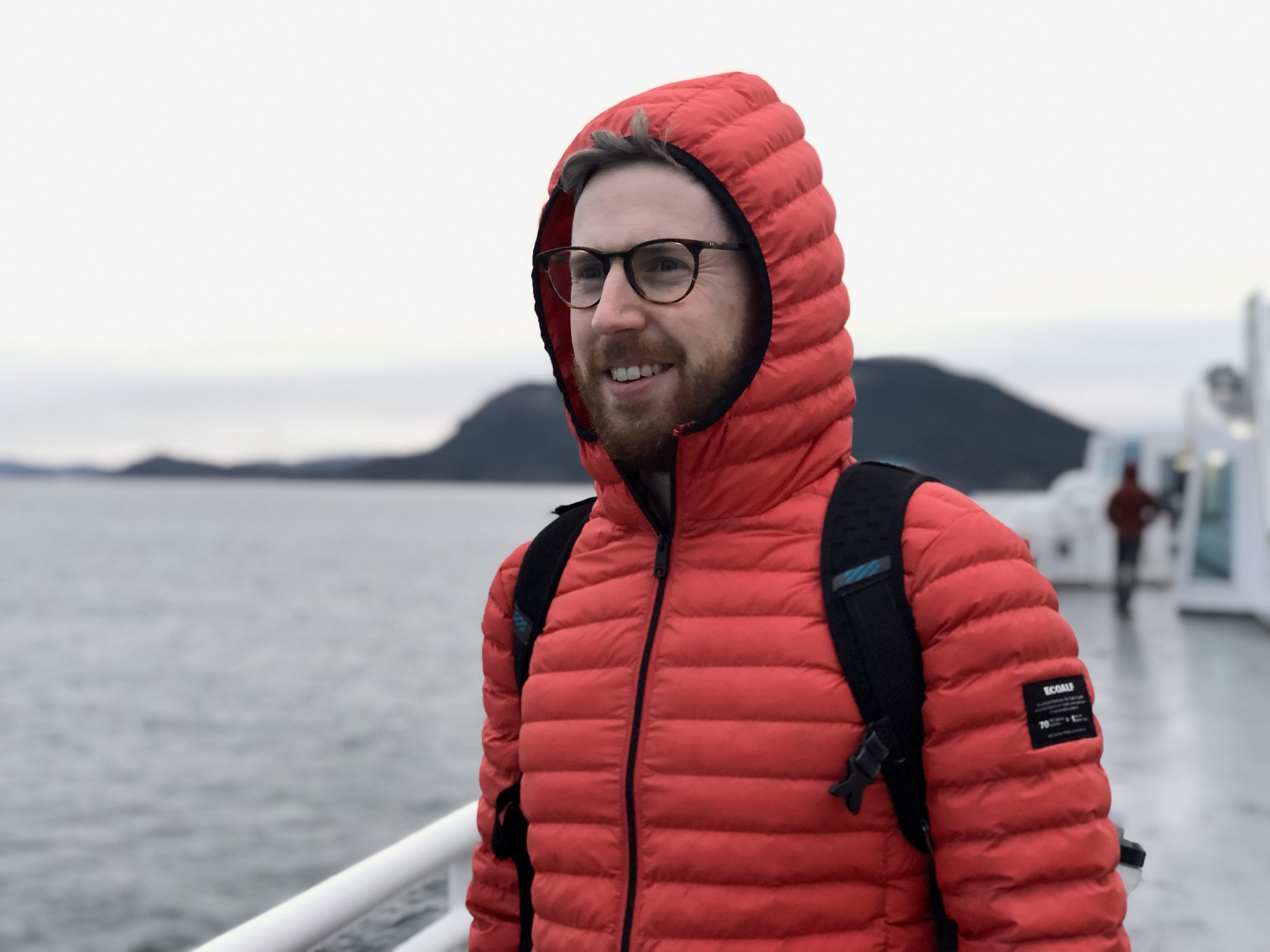
I am a marine environmental historian whose research examines past oceans and the long-term relationships between human societies and marine ecosystems. My work sits at the intersection of environmental history, oceanic history, and historical ecology, and explores how long-term human exploitation of marine life has shaped ecological change, food systems, and environmental knowledge across different historical and geographical contexts.
Methodologically, I combine archival research, quantitative reconstruction, and collaborative research with scientists and Indigenous and coastal communities to recover deeper historical baselines for marine ecosystems. A central focus of my work is on colonial and imperial marine exploitation, Indigenous marine management systems, and the environmental consequences of these interactions in regions including Ireland, the North Atlantic, and the Pacific Northwest.
By tracing these processes over the longue durée, my research contributes to environmental history, oceanic and global history, and the history of science, while also offering historically grounded perspectives relevant to contemporary debates around marine management and restoration.
I completed my PhD in 2021 on the history of Ireland’s sea fisheries (1400–1600) as part of a multidisciplinary research team at the Trinity Centre for Environmental Humanities. I am currently a Research Fellow on the ERC-funded 4-Oceans project at Trinity College Dublin.
Featured Work
Historical Clam Fisheries in BC
In our (Skye Augustine, Marco H, Loren Elizabeth McClenachan) new article, we examine the shift from Indigenous stewardship to settler-colonial commercial clam fisheries in British Columbia (1882–1985). Ancestral clam gardens were managed for millennia to sustain long-term yields. Our research traces how settler-colonial violence and the rise of a commercial clam industry dispossessed Indigenous harvesters and disrupted these systems. The commercial fishery prioritized unsustainable extraction for profit, leading to habitat degradation, the introduction of non-native species, and the decline of native clams. Despite these impacts, we found evidence of ecological resilience where Indigenous tending continued. These findings support restoration strategies that center Indigenous governance, knowledge, and responsibility for coastal ecosystems.
Paper: https://royalsocietypublishing.org/doi/10.1098/rstb.2024.0277